Cart (0)
Your cart is empty
The Kapsoo guide to ube
Ube (pronounced OO-beh) is a purple yam — Dioscorea alata — native to Southeast Asia and a staple of Filipino desserts. Its flesh ranges from lavender to deep violet and tastes mildly sweet, with notes of vanilla, coconut and nuts. Ube is used in lattes, cakes, ice cream and ube halaya, fresh or as a powder.

Kinampay ubeSingle-origin, from the Philippines
Ube is the Tagalog word for the purple yam, Dioscorea alata. It is a true yam — a starchy tuber that grows underground on a climbing vine — with rough, bark-like brown skin and moist flesh that is naturally purple all the way through.
In the Philippines, ube has been cooked into desserts for generations. Outside Asia it became famous in the last decade thanks to its striking color: ube lattes, ube ice cream and ube pastries are now on café menus across the US.
Ube is pronounced “OO-beh” — two syllables, stress on the first. It is not “yoob” and not “oo-bay.”
No. Ube is a yam (genus Dioscorea). Purple sweet potatoes belong to a different plant family (Ipomoea batatas) and are often sold as “ube” in US supermarkets by mistake. The comparison table below shows how to tell them apart.
Ube is native to tropical Southeast Asia and has been cultivated in the Philippines for centuries. It grows in warm, humid climates and is harvested when the tubers are mature, then cooked, grated or dried.
Ube is at the heart of Filipino desserts: ube halaya (a thick, sweet ube jam), halo-halo (shaved ice with ube, leche flan and beans), ube ensaymada and ube pandesal, as well as ube cakes and ice cream served at birthdays and holidays.
There are many ube varieties. Kinampay, grown in the Visayas region of the Philippines, is one of the most celebrated for its aroma and deep color. Kapsoo ube powder is made from single-origin Kinampay ube.
Ube tastes gently sweet, creamy and aromatic. Most people describe notes of vanilla, coconut and toasted nuts (some say pistachio or hazelnut), with a soft earthy finish. It is much less sweet than a sweet potato and far less starchy than taro.
Because its flavor is mellow, ube is usually paired with ingredients that bring it out: coconut milk, condensed milk, vanilla, white chocolate and a pinch of salt.
No. Ube is a root vegetable and is naturally caffeine-free, which is why an ube latte without espresso works at any time of day.
Ube gets its color from anthocyanins, the same natural plant pigments found in blueberries and red cabbage. No dye is needed: real ube colors lattes and pastries on its own, from a soft lavender to a deep violet depending on how much you use.
Anthocyanins react to pH. In alkaline recipes — for example doughs with a lot of baking soda — ube can turn bluish or greenish. A little acid (lemon juice, buttermilk, cream of tartar) keeps the violet bright.
These three purple-ish roots are often confused — especially in bubble tea shops, where “taro” drinks are frequently colored purple. Here is how they compare — or read the full ube vs taro guide.
| Ube | Taro | Purple sweet potato | |
|---|---|---|---|
| Plant | Dioscorea alata (yam) | Colocasia esculenta (corm) | Ipomoea batatas (sweet potato) |
| Flesh color | Lavender to deep violet throughout | White or cream with purple flecks | Purple, sometimes marbled |
| Taste | Mild, vanilla, coconut, nutty | Starchy, nutty, earthy | Sweet, dense, classic sweet potato |
| Texture when cooked | Moist, smooth, creamy | Dry and starchy | Dense and fibrous |
| Typical uses | Halaya, lattes, cakes, ice cream | Bubble tea, dumplings, chips | Roasted, mashed, pies |
Tip: if a “purple yam” in the store has smooth, thin skin, it is most likely a purple sweet potato.
Fresh ube is hard to find outside Asia, so most people cook with one of these forms (see ube powder vs ube extract):
| Form | What it is | Best for |
|---|---|---|
| Fresh or frozen ube | Whole or grated purple yam | Traditional halaya, if you can source it |
| Ube powder | Dried, finely milled ube | Lattes, baking, smoothies — real ube, long shelf life |
| Ube halaya (jam) | Ube cooked with milk, sugar and butter | Spreads, fillings, toppings |
| Ube extract | Flavoring, often with added color | A quick flavor boost; not real ube texture |
As a rule of thumb: 2 tablespoons of ube powder + 3 tablespoons of water or milk ≈ ½ cup of cooked, mashed ube. For 1 cup of mashed ube, use ¼ cup of powder and ⅓ cup of liquid.
Ube is a whole root vegetable: mostly complex carbohydrates, with some fiber, vitamin C and potassium, plus naturally occurring anthocyanins. It is naturally gluten-free, vegan and caffeine-free.
What makes an ube recipe more or less “healthy” is mostly what you add to it — sugar, condensed milk, butter. Pure ube powder with no added sugar lets you control that. More details: ube powder benefits and nutrition.
| Nutrient | Amount |
|---|---|
| Calories | 28 kcal |
| Carbohydrates | 6.5 g |
| Dietary fiber | 0.8 g |
| Natural sugars | 1.2 g |
| Protein | 0.5 g |
| Caffeine | 0 mg |
Values for Kapsoo ube powder. Nutrition varies between ube products and varieties.
Ube is incredibly versatile. Here is where to start:
Whisk 1–2 tablespoons of ube powder with a splash of hot water into a smooth paste, then add milk (hot or iced) and your favorite sweetener. Try it in an ube latte, a layered ube matcha latte or an ube smoothie.
Replace 2–3 tablespoons of flour per cup with ube powder in cookies, cakes, waffles and breads. For the most vivid color, use baking powder rather than baking soda.
Fold ube into creams, cheesecake, tiramisu or no-churn ice cream — or cook the classic Filipino ube halaya.
Popular ube recipes to try

A soft, naturally purple ube sheet cake with coconut milk and fluffy ube buttercream — easy, one pan.

Creamy, naturally purple ube cheesecake bars on a buttery graham cracker crust — easier than a whole cheesecake.

Creamy no-churn ube ice cream with 5 ingredients and real ube powder — plus a Ninja Creami version.
Kapsoo ube powder ticks every box: 100% single-origin Kinampay ube, with no sugar, no coloring and no additives.
FAQ
Ube is called purple yam in English. Its botanical name is Dioscorea alata.
No. Taro (Colocasia esculenta) has white or cream flesh with purple flecks and a starchy, nutty taste. Ube is purple throughout and tastes sweeter, with vanilla and coconut notes.
No. Ube is a true yam. Purple sweet potatoes are a different plant and are sometimes mislabeled as ube in stores.
Ube is mildly sweet and creamy, with notes of vanilla, coconut and nuts, and a soft earthy finish.
No. Ube is a root vegetable and is naturally caffeine-free.
Yes. The color comes from natural pigments called anthocyanins — no food coloring is needed.
Fresh ube is rare outside Asia. The easiest way to cook with real ube is a pure ube powder like Kapsoo ube powder, made from 100% Kinampay ube. See also: where to buy ube powder.
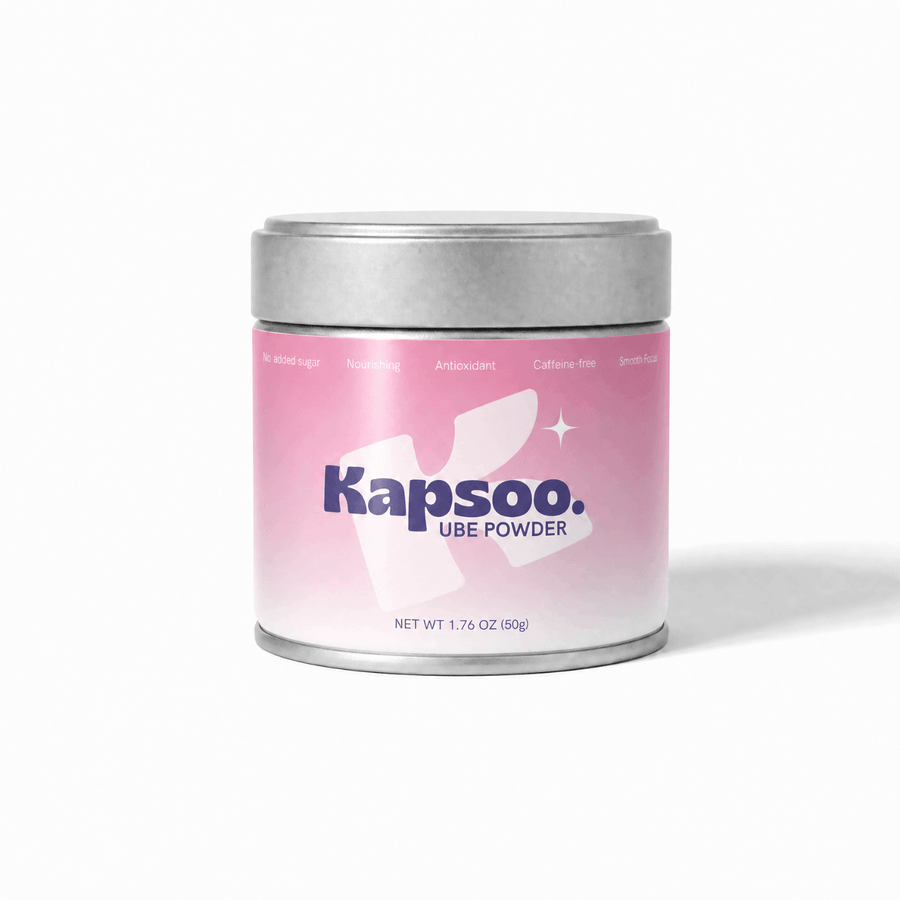
Kapsoo Ube Powder
Pure, single-origin Kinampay ube powder for lattes, baking and desserts — with nothing added.
$34.90 · Free US shipping on orders over $45